Job search · ATS
88% of Employers Admit Their Hiring Software Rejects Qualified Candidates
A 2021 Harvard Business School and Accenture survey asked 2,200 executives about their own screening software. Almost 9 in 10 said it rejects candidates who could do the job. That number should change how you apply.
FutuRole Team
August 15, 2026 · 3 min read
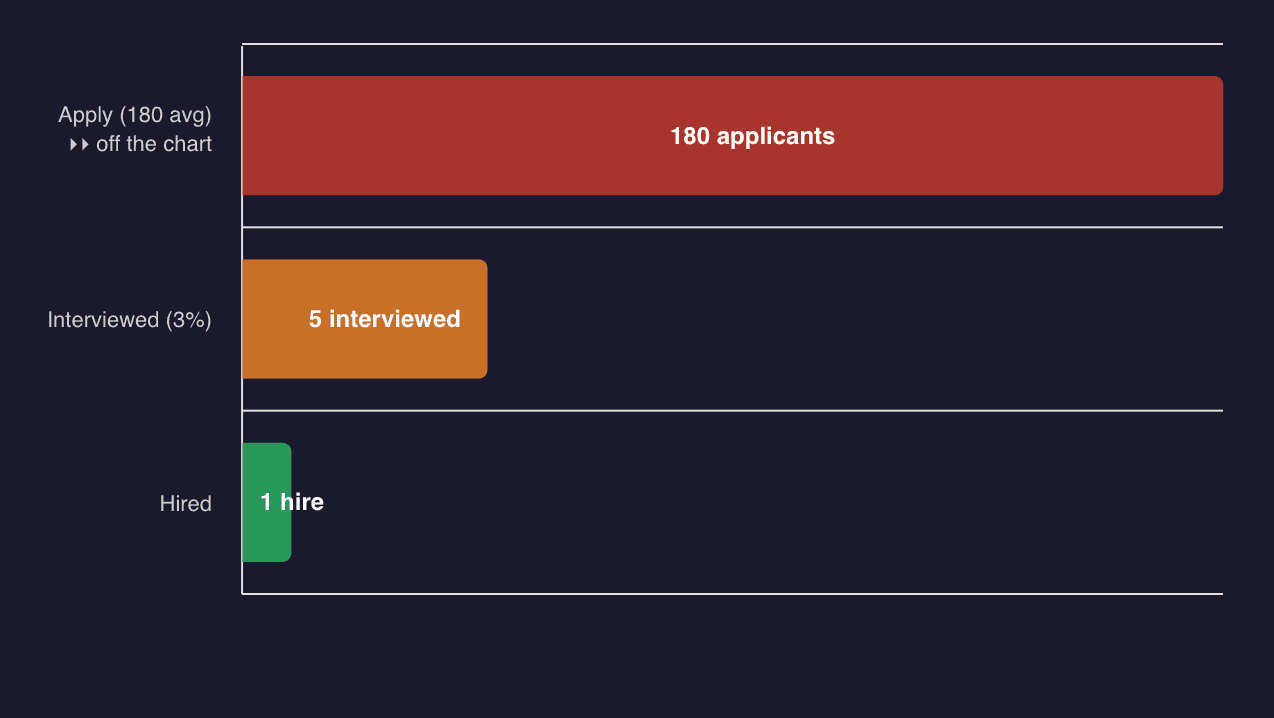
You apply. You hear nothing. You apply again. Eventually you start wondering if the problem is you: your resume, your experience, the way you phrased a bullet point.
It's worth hearing what the people who run these hiring systems actually admit, on the rare occasions someone asks them directly.
In 2021, Harvard Business School and Accenture surveyed more than 2,200 executives for a report called Hidden Workers: Untapped Talent. The headline finding: 88% of employers admitted their own screening software rejects qualified candidates who don't match the exact criteria someone typed into the system. For middle-skill roles, that number climbs to 94%. The researchers also put a number on the human cost: over 27 million Americans sit in that filtered-out pile, capable of doing the work, never called back.
That's not a candidate's complaint about a system that feels unfair. That's employers describing their own software.
The gap is bigger than a keyword problem
The instinct is to treat this as formatting: use the right font, skip tables, avoid headers a parser might choke on. That part is real, but it's the smaller piece. The bigger one, from the same study, is how literally the filtering criteria get applied. 49% of companies auto-screen out any candidate with an employment gap longer than six months, with no distinction between a layoff, a caregiving break, or time back in school. The system doesn't ask why the gap exists. It counts the months and moves on.
A recent piece from Digital Magazines looked at the tooling that's grown up around this problem: browser autofillers, contact-finding tools, resume tailoring software. Its point holds up. When filtering software rejects qualified people at this rate, building or buying something to get past it is a rational move, not a shortcut to feel guilty about.
What to do with this
Knowing the filter is blunt only matters if it changes what you send.
Match the posting's exact wording. If the listing says "stakeholder management" and your resume says "cross-functional collaboration," a person bridges that gap without thinking. A parser often doesn't. Rewriting each application's language to mirror the specific posting takes real time by hand, which is why most candidates skip it. FutuRole's resume tailoring does that rewrite in under a minute, matched to the posting you're actually applying to.
Check what the ATS sees before you submit, not after silence tells you something went wrong. You can't normally tell which sections got parsed, which keywords got flagged as missing, or whether your formatting broke on the other end. FutuRole's free ATS scanner runs your resume against the actual job description and shows you that before you apply.
If you have a gap, name it in one line. Roughly half of companies filter on gap length alone, so leaving it unexplained hands the parser nothing to read except an empty stretch of time.
What this actually means
Almost nine in ten employers admit their own software is rejecting people who could do the job. That's not going to be fixed from the candidate side. Until employers change their filters, the people getting callbacks are mostly the ones sending resumes that match what's actually being screened for, not the ones sending the same resume to two hundred listings and hoping.
See what an ATS actually flags in your resume before you apply. Run FutuRole's free ATS scanner